
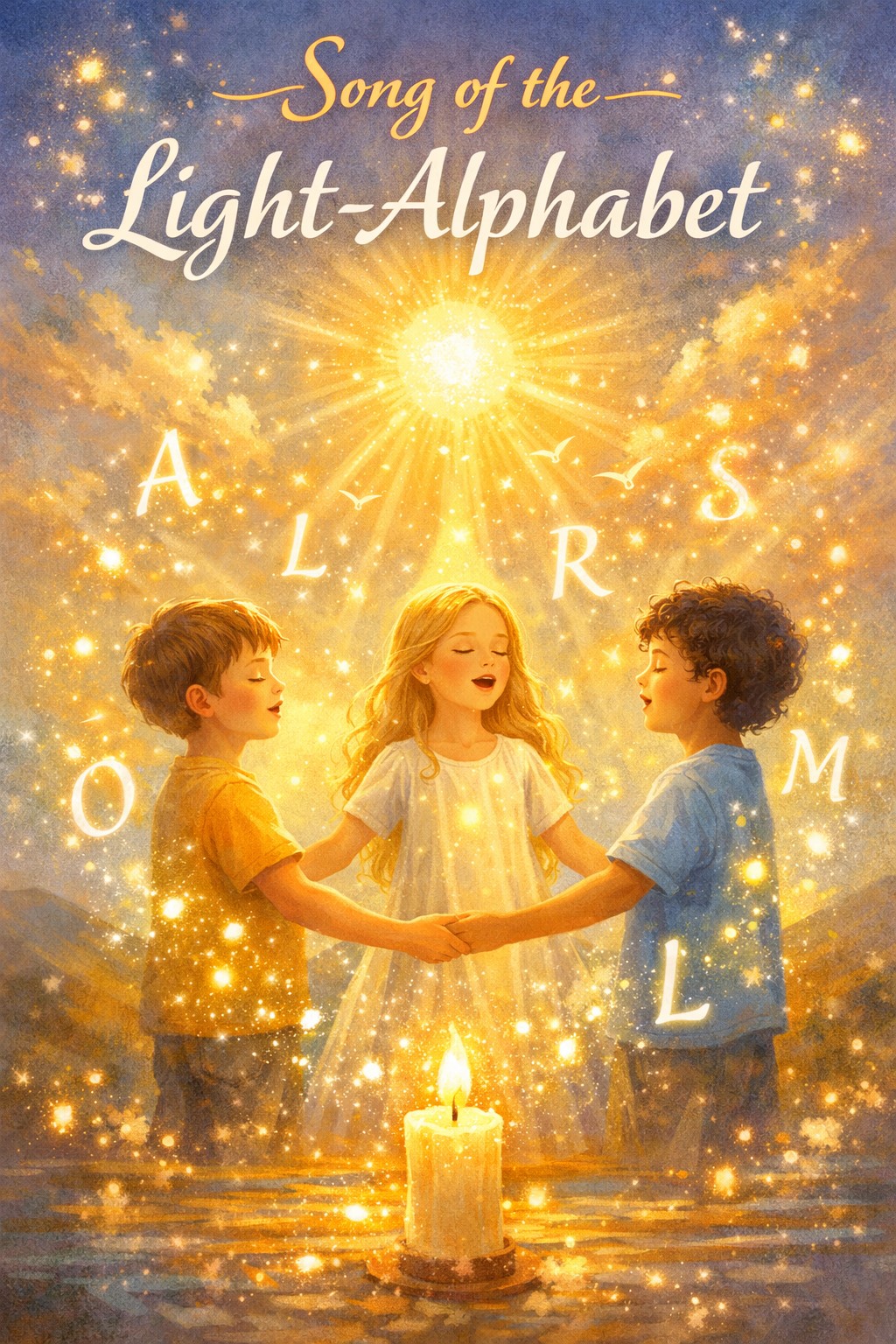
A Practice of Receiving and Voice
The Light-Alphabet comes alive through experience.
Below are two simple texts offered as practices, not as explanations. They are meant to be received slowly, with openness, allowing language to touch awareness rather than the intellect.
There is nothing to achieve.
Only presence.
A Text to Receive
(for silent or inward reading)
Read this text slowly.
Leave space between the lines.
Let it arrive rather than be understood.
Text
I am here.
I breathe,
and the light breathes back.
A letter appears,
not on the page,
but within me.
I recognize it.
It has known me longer than I know myself.
What I read
does not come from outside.
It is remembered,
like a name
spoken softly
in the dark.
I do not need to hold anything.
The light reads me
as I read.
And this is enough.
This text supports a first gesture of the Light-Alphabet:
receiving without effort.
It invites trust in inner recognition and allows language to settle where it belongs — beneath thought.
The Light Reading
(to be spoken aloud, almost as prayer or song)
This second text is meant to be voiced.
Read it aloud, slowly.
Let the breath lead.
Allow silence where it naturally arises.
Light Reading
I open myself
to the light that knows me.
I breathe in.
I breathe out.
I am here.
Each sound that is spoken
remembers me.
Each letter
finds its place
in stillness.
I do not need to make anything.
I do not need to know.
What is spoken
is carried.
What is heard
becomes light.
I read,
and I am read.
I speak,
and I am answered
by silence.
This is enough.
This is now.
This is light.
This reading introduces a second gesture of the Light-Alphabet:
voice as remembrance.
Sound is not used to control meaning, but to let meaning reveal itself.
How These Texts Are Used
These texts may be:
- read alone or shared with a child
- spoken together, alternating lines
- whispered, sung on a single tone, or read by candlelight
- returned to regularly, allowing familiarity to deepen
They are not exercises.
They are doors.
The Intention Behind the Practice
The Light-Alphabet is not concerned with correctness or progress.
It nurtures:
- trust in inner knowing
- a relaxed relationship with language
- reading as connection rather than performance
Through simple practices like these, language becomes a place of meeting — between light and form, silence and sound, inner and outer worlds.
In the Light-Alphabet, learning does not move forward.
It moves inward.
And from there, gently,
it shines outward again. ✨
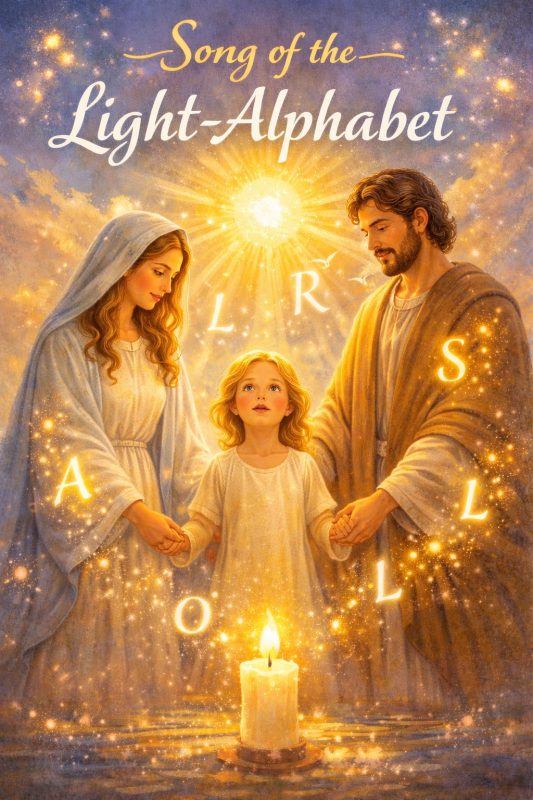
Het Licht-Alfabet – leren als herinneren
1. Geen letters, maar gebaren van Licht
Elke letter is geen teken, maar een beweging van bewustzijn.
- M is omarmen
- A is openen
- R is rondgaan en terugkeren
- S is stromen
- L is lichten
Letters worden niet “geleerd”, maar gevoeld:
- in adem
- in klank
- in ritme
- in stilte
Een kind herkent de letter zoals je een gezicht herkent in zacht licht.
2. Woorden als herinneringsankers
Geen losse woorden zoals aap of roos, maar dragende woorden:
- Licht
- Naam
- Thuis
- Stem
- Nu
- Bron
Woorden die niet uitleggen, maar oplichten.
Woorden die iets wakker maken dat al aanwezig is.
3. Beelden zonder plaatjes
Geen illustraties die vastleggen.
Maar innerlijke beelden:
- een gloed achter de ogen
- een warmte in de borst
- een trilling bij een klank
Het alfabet verschijnt:
- in kaarslicht
- in schaduwen op de muur
- in water
- in ademwolken op glas
Het kind leert:
“Ik zie met meer dan mijn ogen.”
4. Lezen als her-inneren
Lezen is hier geen ontcijferen, maar terugkeren.
Elke letter fluistert:
“Je kent mij al.”
Elke zin is geen informatie, maar een deur.
Elke bladzijde een zachte uitnodiging.
Fouten bestaan niet — alleen andere ingangen.
5. De rol van de begeleider
De volwassene is geen leraar, maar een wachter van het licht.
- spreekt langzaam
- luistert meer dan hij zegt
- laat stilte toe
- vertrouwt dat begrijpen vanzelf opkomt
Niet: “Kijk goed.”
Maar: “Voel eens.”
6. Het doel
Niet vlot lezen.
Niet snelheid.
Niet prestaties.
Maar:
- herinnering aan verbondenheid
- vertrouwen in innerlijk weten
- taal als brug tussen binnen en buiten
Een alfabet dat zegt:
“Je bent niet hier om iets te worden.
Je bent hier om te herinneren wie je bent.”
Neem de volgende tekst niet om te begrijpen, maar om te ontvangen.
Lees langzaam. Laat ruimte tussen de woorden.
Ik ben hier.
Ik adem, en het licht ademt terug.
Een letter verschijnt, niet op papier
maar in mij.
Ik herken haar.
Zij kent mij al langer.
Wat ik lees, komt niet van buiten.
Het wordt herinnerd
zoals een naam
die zacht wordt uitgesproken
in het donker.
Ik hoef niets vast te houden.
Het licht leest mij
terwijl ik lees.
En dat is genoeg.
Lichtlezing
Ik open mij
voor het licht dat mij kent.
Ik adem in.
Ik adem uit.
Ik ben hier.
Elke klank die klinkt
herinnert zich mij.
Elke letter
vindt haar plaats
in stilte.
Ik hoef niets te maken.
Ik hoef niets te weten.
Wat gezegd wordt,
wordt gedragen.
Wat gehoord wordt,
wordt licht.
Ik lees
en word gelezen.
Ik spreek
en word beantwoord
door stilte.
Zo is het goed.
Zo is het nu.
Zo is het licht.